Olivia Walter · 6 October 2026
Polish Research Networks Connect Quantum Sensors to Advances in Solar Efficiency
Polish academic networks have expanded their focus on integrating quantum sensor technologies with solar energy systems, and this work draws from collaborations across multiple universities and research institutes. Data from these efforts show that quantum sensors can detect subtle variations in light absorption and thermal fluctuations within photovoltaic materials, which in turn supports adjustments that raise overall energy conversion rates. Researchers at institutions including those in Warsaw and Krakow have documented how these sensors operate at nanoscale precision, allowing real-time monitoring that traditional tools often miss.
Core Principles Behind the Integration
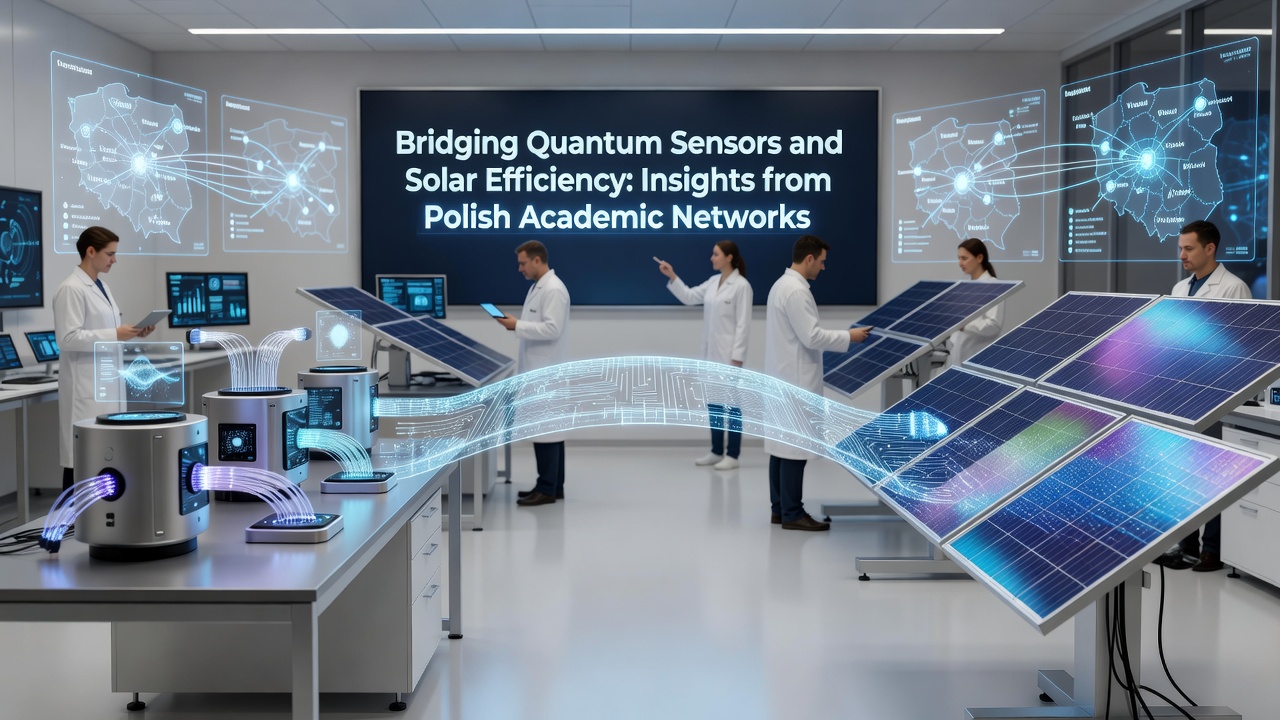
Quantum sensors rely on phenomena such as superposition and entanglement to measure physical quantities with high sensitivity, while solar efficiency depends on minimizing losses from reflection, heat, and recombination in cells. Polish teams have combined these areas by embedding sensor arrays directly into experimental solar modules, and studies indicate that this setup captures photon-level data during peak sunlight hours. Evidence from joint projects reveals that such measurements help identify defects in silicon structures early, leading to targeted improvements in cell design.
One project launched in 2025 examined how quantum-enhanced detectors track magnetic field changes caused by electron movement in active solar layers, and results pointed to efficiency gains of up to 3 percent in controlled test conditions. These findings align with broader European research trends reported by the European Commission, which tracks similar sensor applications in renewable energy sectors across member states.
Network Structures and Data Sharing
Academic networks in Poland operate through shared databases and joint laboratories that pool resources from optics, materials science, and quantum physics departments. Participants exchange datasets on sensor calibration and solar irradiance patterns, which allows models to predict performance under varying weather conditions. Figures from these exchanges show reduced downtime in pilot installations when quantum feedback loops adjust panel orientation automatically.
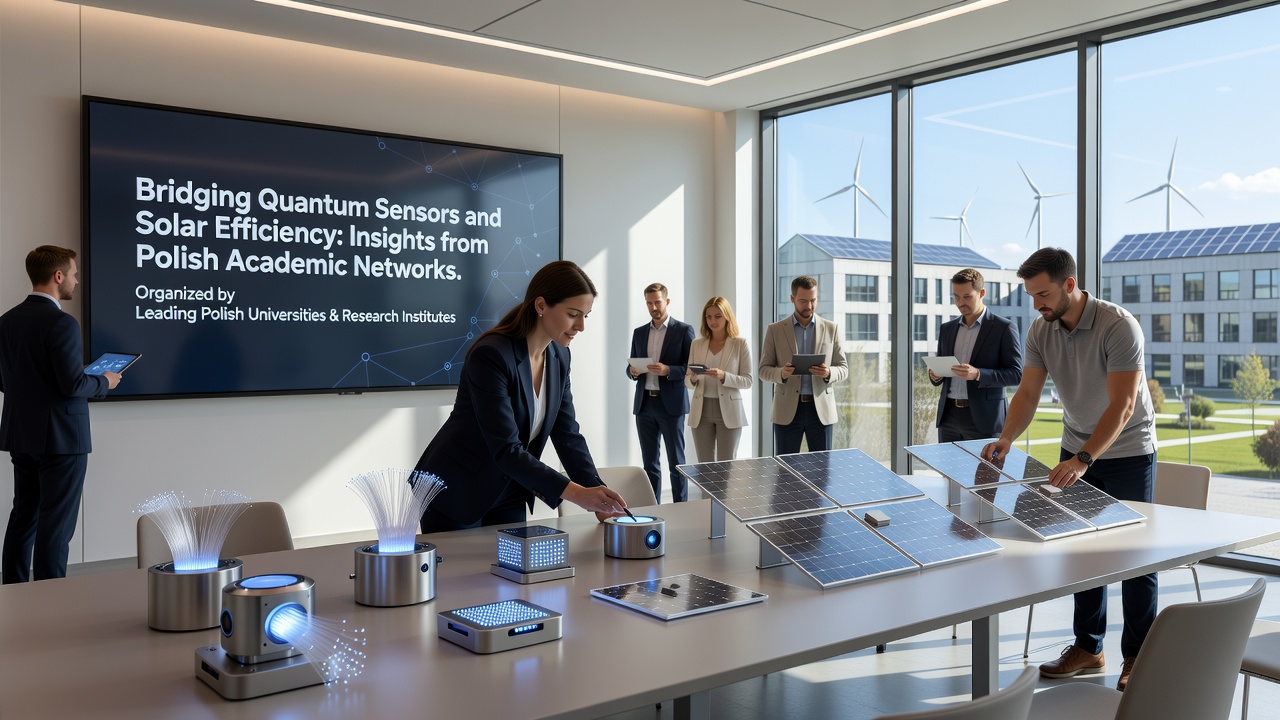
Workshops held in late 2025 prepared teams for upcoming field trials scheduled through October 2026, and these sessions covered calibration protocols that maintain sensor accuracy across temperature ranges typical in Central European climates. Observers note that the distributed structure of the networks speeds up iteration cycles compared with isolated lab efforts.
Technical Applications and Measured Outcomes
Applications extend to both ground-mounted and rooftop solar arrays, where quantum sensors monitor spectral shifts that affect output in real time. Polish researchers have reported that pairing these devices with machine-learning algorithms refines maximum power point tracking, and test sites recorded steadier yields during cloudy periods. International comparisons from sources such as the U.S. Department of Energy highlight parallel developments, yet the Polish approach emphasizes low-cost sensor fabrication using local materials.
Case examples include a multi-site study in Silesia that linked quantum readings to a 2.7 percent average rise in annual energy harvest, while another trial in the Baltic region tested durability under high humidity. These outcomes stem from iterative testing rather than single breakthroughs, and the networks continue to refine sensor placement strategies based on accumulated field data.
Future Steps in the Field
Plans for October 2026 include expanded trials that incorporate satellite-linked quantum sensors for large-scale solar farms, and preliminary simulations suggest further efficiency lifts when atmospheric interference data feeds directly into control systems. Polish networks maintain open channels with partners in Canada and Australia to compare methodologies, which helps validate findings across different solar resource profiles.
Equipment upgrades funded through national grants focus on miniaturizing sensor components without sacrificing measurement resolution, and early prototypes already demonstrate compatibility with existing inverter systems. This progression builds on established optics research while introducing quantum elements at practical scales.
Conclusion
Polish academic networks continue to map practical pathways that link quantum sensing capabilities with solar system enhancements, supported by ongoing data collection and cross-institutional coordination. The work supplies concrete metrics on performance improvements and equipment integration that other research groups can reference. As trials advance into 2026 and beyond, the accumulated evidence will clarify how these combined technologies scale under diverse operating conditions.