
Olivia Walter · 3 November 2026
Inside the Allocation Mechanisms of Materials Science Grants and Effects on University Initiatives
Materials science funding operates through layered review systems that connect government agencies, industry partners, and academic institutions across multiple regions, and these processes shape both curriculum development and laboratory operations in measurable ways. Agencies distribute resources via competitive calls that require detailed proposals outlining experimental goals, team qualifications, and projected outcomes, while evaluators assess technical merit alongside alignment with national priorities such as sustainable materials or advanced manufacturing.
Grant Review Structures Across Regions
National Science Foundation panels in the United States examine thousands of submissions each cycle, applying criteria that weigh innovation potential against feasibility and broader impacts on student training, whereas the European Research Council employs starting and consolidator grants that prioritize early-career researchers working on novel alloys or nanomaterials. Data from agency reports indicate that successful applications often incorporate collaborative elements spanning multiple departments, which in turn expands access to specialized equipment for graduate students and postdoctoral fellows.
Australian Research Council funding streams similarly tie materials projects to environmental and energy applications, requiring evidence of industry co-investment that can extend program durations and support additional teaching assistants in related coursework. Observers note that these requirements create pathways for undergraduate involvement through summer research placements funded under the same umbrella awards.
Direct Effects on Educational Programs
University departments receiving sustained materials science support frequently update laboratory modules to reflect current characterization techniques such as electron microscopy or spectroscopy, and this integration allows students to gain hands-on experience with tools otherwise limited to funded research groups. Figures from institutional records show increased enrollment in materials engineering tracks following major grant announcements, since stipends and tuition support become available for qualifying participants.
Cross-institutional networks funded through these channels also facilitate shared course modules delivered via virtual platforms, enabling smaller colleges to offer advanced topics without duplicating expensive instrumentation. In November 2026, several agencies plan synchronized announcement dates that could align new educational supplements with existing research consortia, potentially streamlining application processes for faculty seeking dual-purpose awards.
Research Program Adaptations and Resource Distribution
Funded teams often reallocate portions of budgets toward shared facilities that serve both research and teaching missions, creating central hubs where multiple projects access high-performance computing resources for modeling material behaviors. This arrangement reduces duplication of purchases while increasing the number of users trained on standardized protocols, according to summaries released by funding bodies.
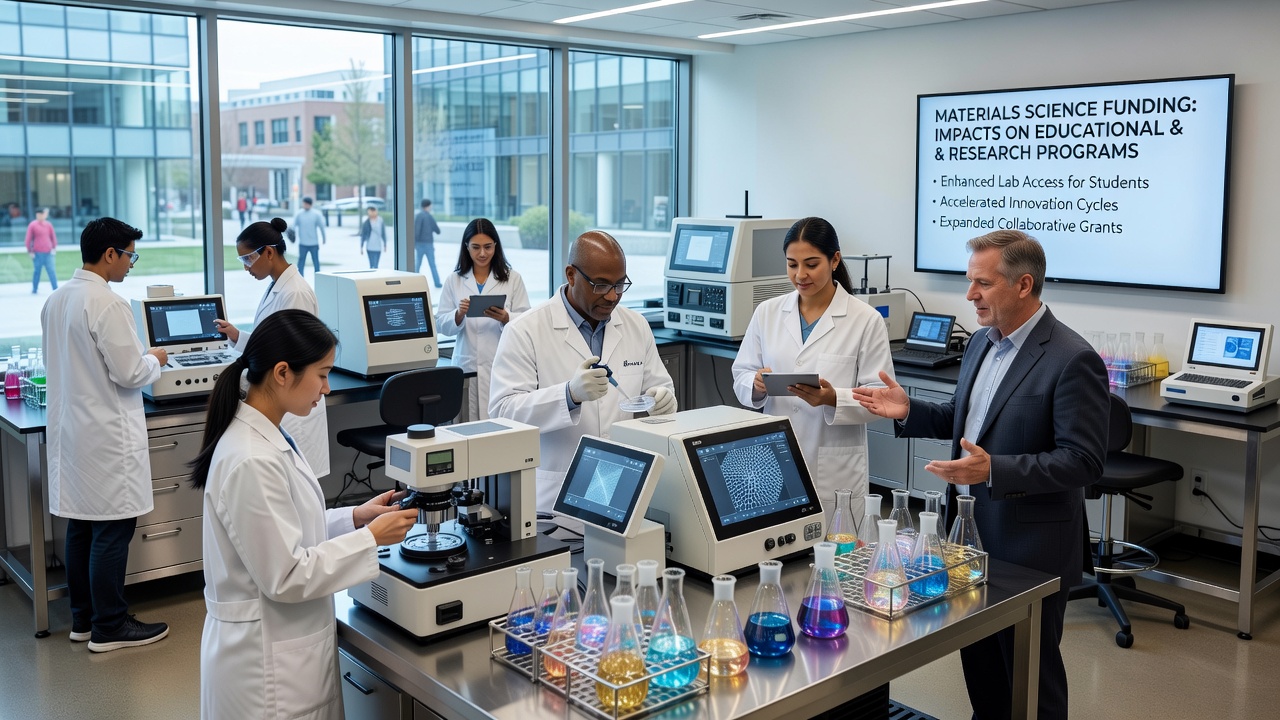
Longer grant periods allow principal investigators to plan multi-year experiments that incorporate student contributions at various stages, from sample preparation through data analysis, and these extended timelines correlate with higher publication rates involving trainee authors. European Commission tracking data reveal that projects incorporating explicit training components maintain steadier output even when primary investigators transition between institutions.
Challenges in Balancing Priorities
Review panels sometimes face trade-offs between high-risk exploratory work and projects with immediate educational deliverables, and agencies respond by creating separate tracks that ring-fence portions of budgets for curriculum-linked activities. Canadian funding records demonstrate that such segmented calls have increased the proportion of awards supporting undergraduate research experiences without diminishing overall scientific productivity metrics.
Institutions in regions with emerging materials programs benefit when international collaborations supply supplementary resources, yet they must navigate reporting requirements that differ by funder, which adds administrative layers to project management. Those managing multiple grants report that unified data management platforms help consolidate outputs for various oversight bodies.
Conclusion
Materials science funding mechanisms continue to evolve through adjustments in review criteria and partnership models that directly influence the scope of university laboratories and course offerings. Information from agencies such as the National Science Foundation and the European Research Council shows consistent patterns where sustained investment expands both research capacity and student participation rates across diverse geographic settings.