Olivia Walter · 2 September 2026
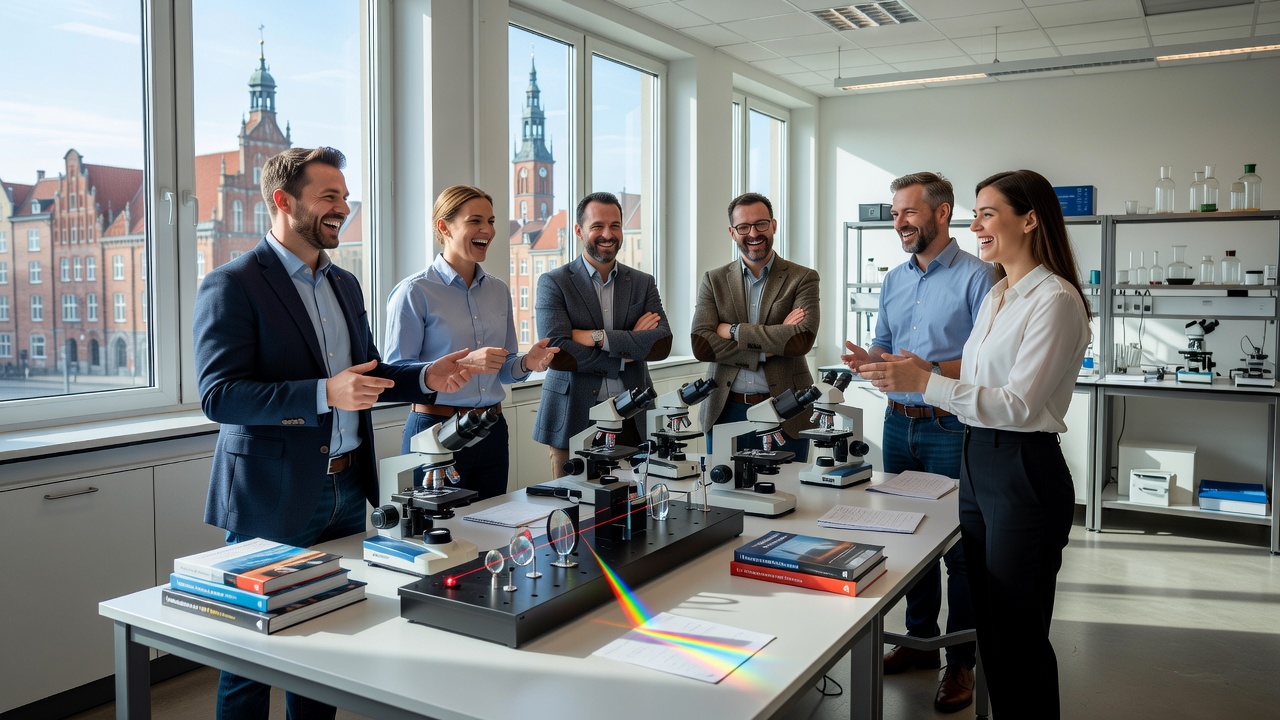
The Gdansk research team at Prismforge Academic Research has secured a substantial grant to expand educational programs focused on optics. The funding supports curriculum development hands-on workshops and equipment upgrades for students at multiple academic levels. Project leaders emphasize practical training in photonics laser systems and imaging techniques to prepare participants for careers in science and technology sectors.
Grant Details and Implementation Plan
The award provides 450000 euros across three years covering new laboratory setups teacher training sessions and mobile outreach units for schools in the region. Specific objectives include training over 200 educators annually creating open educational resources and forming partnerships with European optics institutes. Activities will prioritize accessibility for students from diverse backgrounds with special emphasis on rural communities and underrepresented groups in STEM. Progress will be tracked through enrollment data skill assessments and feedback from participating institutions ensuring measurable advancements in optical education quality.
Core team members comprise physicists educators and industry consultants who have already begun designing modular lesson plans adaptable to secondary and undergraduate settings. Equipment purchases will include spectrometers laser kits and simulation software to enable experiments previously unavailable in many classrooms. International collaborations will bring guest lectures and joint research opportunities further enriching the program scope.
Expected Educational and Research Outcomes
Anticipated results encompass heightened student interest in optics fields increased teacher confidence in delivering advanced topics and stronger ties between academia and local technology firms. Internship placements will offer practical experience while open source materials will extend benefits beyond direct participants. The initiative supports Prismforge Academic Research goals by integrating teaching with ongoing studies in light based technologies. Long term effects may include contributions to innovations in medical diagnostics communications and sustainable energy through a better prepared workforce. Regular evaluations will guide adjustments to maximize impact across the Gdansk educational community.