Mara Otto · 22 September 2026
Cross-Border Optics Partnerships Fuel Developments in Light Dispersion Applications for Healthcare and Energy Sectors
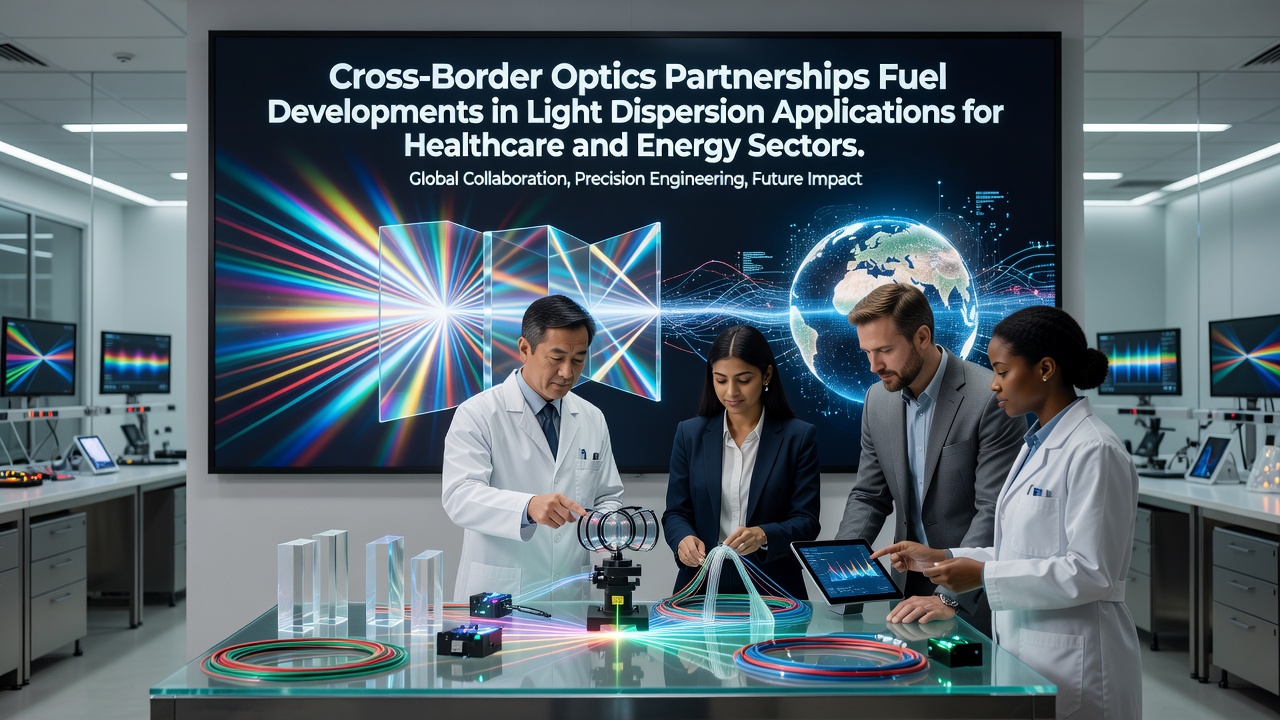
International collaborations among optics specialists have accelerated progress in light dispersion techniques, and these efforts now support targeted advances across healthcare diagnostics and renewable energy systems. Teams from multiple regions coordinate resources to refine prism-based technologies, while shared data networks allow faster iteration on dispersion models that improve precision in both fields.
Partnership Structures and Research Coordination
Cross-border agreements connect laboratories in Europe with counterparts in North America and Asia, creating frameworks where equipment, expertise, and testing protocols move between sites without duplication of effort. Researchers coordinate through joint protocols that standardize measurement of light scattering angles, and this alignment reduces variability when results from one facility feed directly into experiments at another location. Data from these exchanges show consistent gains in dispersion efficiency, particularly when multi-national teams apply uniform calibration standards across different wavelength ranges.
Healthcare Applications and Diagnostic Improvements
Light dispersion methods refined through these partnerships now enhance imaging systems used in medical procedures, where controlled scattering helps differentiate tissue types during scans. Hospitals in several countries have adopted updated prism assemblies that deliver sharper contrast in optical coherence tomography devices, and clinical reports indicate reduced need for follow-up tests when dispersion parameters align more closely with specific anatomical targets. Engineers adjust alloy compositions in prism elements to minimize unwanted reflections, which in turn supports clearer visualization of vascular structures and supports earlier detection protocols in oncology settings.
Energy Sector Integration and Efficiency Gains
In renewable energy installations, light dispersion components guide solar collection systems toward higher output levels by directing specific wavelengths to photovoltaic cells with greater accuracy. Field tests conducted under partnership programs have recorded output increases when dispersion layers compensate for atmospheric variations, and these adjustments maintain performance across seasonal changes. Grid operators incorporate the resulting data into predictive models that balance supply from dispersed solar arrays, while similar techniques appear in advanced lighting systems designed for large-scale facilities seeking lower overall consumption.

September 2026 marks the scheduled rollout of an expanded testing phase involving facilities in three continents, where updated dispersion arrays will undergo simultaneous evaluation under varied environmental conditions. Project leads expect the phase to generate comparative datasets that further refine prism performance metrics, and participating organizations plan to publish aggregated findings through established academic channels.
Technical Milestones and Material Advances
Material scientists working across borders have introduced alloy blends that resist thermal expansion while preserving dispersion consistency, and these compositions undergo validation in both controlled chambers and outdoor arrays. Studies coordinated by international research consortia document how surface treatments on prism elements reduce scattering losses, which directly translates to measurable improvements in signal strength for medical sensors and energy harvesters alike. Observers note that the iterative feedback loops between healthcare and energy teams have produced hybrid designs adaptable to both domains without major retooling.
Regulatory and Standards Alignment
Agencies such as the European Commission Directorate-General for Research and Innovation track these developments through periodic reviews, while parallel oversight from Canadian federal research bodies ensures safety parameters remain consistent across borders. Alignment on dispersion measurement standards allows manufacturers to certify components for multiple markets, and this reduces certification timelines when new prism configurations emerge from collaborative projects. Industry reports from organizations like the Optical Society of America compile performance benchmarks that guide further investment decisions in both sectors.
Conclusion
Continued cross-border coordination in optics research sustains momentum for light dispersion refinements that serve distinct yet overlapping needs in healthcare and energy. Ongoing data exchange and joint testing schedules position participating groups to address emerging requirements, and the structured exchange of findings supports incremental progress across both application areas without reliance on isolated national efforts.